

We put the NV Casino mobile app through a full diagnostic suite periodically to ensure every tap, from opening the app to the instant a roulette result lands, happens without any noticeable lag. This report details our latest numbers, collected under real-world conditions across several devices, signal strengths, and operating systems. Our internal benchmark includes app launch, lobby rendering, live stream delay, bet placement, and overall navigation smoothness. We want to show you exactly what to expect after you download the app from the NV Casino page, and we also highlight the specific device and network tweaks that gave us the snappiest sessions during testing.
Data Usage and Idle Efficiency
Many players track mobile data usage, so we measured bytes transferred during standard one-hour sessions. A mixed session of twenty slot spins, ten live dealer rounds, and five blackjack hands consumed an average of 68 MB on the highest stream quality setting. The NV Casino app uses gradual image loading and dynamic asset fetching, so it never downloads content for sections you do not visit. When we remained solely in the slot lobby and played three games, total data fell to 42 MB. We also left the app running in the background for two hours with notifications active; background data consumption remained under 3 MB, most of it consumed by real-time balance and odds push updates.
One great feature is the audio engine: compressed ambient sounds and dealer voice streams measured just 1.2 MB per hour without any noticeable drop in clarity. Turning on the data-saver mode in the app settings limited live stream resolution at 480p and reduced total consumption by 35 percent, while slot graphics stayed crisp. We observed an interesting behaviour during our static lobby test: leaving the app open on the game grid without interaction for ten minutes initiated a light idle mode that halted unnecessary animation loops, reducing CPU usage by 40 percent and avoiding battery drain on older handsets. That smart idle behaviour ensures the NV Casino experience responsible even when you step away for a bit.
How We Performed the Speed Tests
We developed a process that reflects genuine player behaviour, not a controlled lab environment. Every measurement came from standard phones with standard background apps running, similar to the phone in your pocket. We gathered timings with precise screen recording and network request tracing, calculating the gap from the first tap to a completely loaded result. Tests included fresh installs after deleting all cache, warm starts, and sessions that hopped between Wi-Fi, 4G, and 5G. We also deliberately messed with the signal to see how well the NV Casino app responded. The numbers we share are average figures from fifty identical tests per scenario, with irregularities caused by short network congestion removed.
- Test devices: iPhone 15 Pro, Samsung Galaxy S24, Google Pixel 8, OnePlus 12 and Xiaomi Redmi Note 13
- System software: iOS 17.4, Android 14 with manufacturer skins
- Connection types: 5G (average 320 Mbps), 4G (45 Mbps), home Wi-Fi 6 (500 Mbps) and public café Wi-Fi (12 Mbps)
- Measured actions: cold launch, login authentication, game lobby load, live dealer stream start, slot spin to result, table game bet confirmation and menu transitions
Real-Time Dealer Stream Latency Analysis
Real-time casino games need near-zero lag between the dealer’s play and what you view on your screen, so we assessed end-to-end glass-to-glass latency with a high-speed camera focused on both the physical table feed and the mobile display. Under ideal 5G and Wi-Fi 6 conditions, the NV Casino app held a median latency of 0 point 9 seconds. On 4G that figure increased to 1.4 seconds, still plenty of time to place bets before the dealer calls an end to the round. We also checked aggressive bandwidth throttling down to two Mbps, which automatically engaged the app’s adaptive bitrate engine; the stream resolution scaled back while keeping audio in sync, and latency held at 2.3 seconds until the connection recovered. No manual quality toggle was needed.
We observed how quickly the betting interface changes when the dealer announces “no more bets.” The greyed-out overlay and bet rejection state activated within three hundred milliseconds of the signal we recorded from the studio feed. That tiny window stops you from accidentally placing late wagers. In games like Lightning Roulette and Speed Baccarat, where rounds move very fast, the interface kept pace without lag spikes, and on-screen chip placement recorded taps instantly. Our testers never encountered the frustration of a delayed bet confirmation that could miss an entire round, which demonstrates how well the app handles real-time WebSocket messaging.
Game Lobby Loading Performance
The game lobby gathers hundreds of live tables, slots, and table game symbols, so we paid close attention to how quickly the dynamic grid loads after login. With a stable 5G link the fully arranged lobby, including thumbnail previews and live player counts, loaded in 2.4 seconds using an iPhone and 2.6 seconds on the Galaxy S24. Under the slowest public Wi-Fi we recorded 4.1 seconds, which still seemed fluid because the NV Casino app shows a minimal skeleton interface with category tabs visible right away while images load in. Browsing vertical rows and swiping game categories sideways kept a consistent 60 frames per second with no stutter, even after loading over 300 game thumbnails rapidly. We saw no tile ghosting or placeholder flicker during fast flings.
We tested search and filter speed since many players search directly for a preferred title. Typing a game name into the search field returned suggestions in under 200 milliseconds, and tapping a result moved to the game screen with a 1.1-second loading animation. Setting multiple filters (provider, volatility, table limit) reloaded the lobby in an average of 1.8 seconds, regardless of whether we utilized a flagship phone or the budget Xiaomi. The app uses cached images again for game cards you have seen before, explaining the consistency we observed. Our stress-testing with frequent filter changes never caused a freeze or a blank screen.
Performance On Various Devices and Operating Systems
The NV Casino app delivered remarkably uniform frame pacing throughout our device pool, with just a few variations being noticeable https://nv-be.casino/app/. The iPhone 15 Pro and Galaxy S24 posted nearly identical speed scores on either Wi-Fi and 5G, with less than a 4 percent variance in all measured timings. The Google Pixel 8 matched flagship performance but operated marginally warmer after sustained live dealer play, though not enough to cause thermal throttling. The OnePlus 12 impressed us with the quickest cold launch on Android at 1.9 seconds, supported by its UFS 4.0 storage. The mid-tier Xiaomi, operating a Snapdragon 7s Gen 2, nonetheless loaded the game lobby in under 3.5 seconds and maintained live stream latency at 1.8 seconds over 4G, showing the app is well adjusted for devices that sits below the premium tier.
- iPhone 15 Pro (iOS 17.4): cold boot 1.8 s, spin duration 2.0 s, live latency 0.9 s, lobby load 2.4 s
- Samsung Galaxy S24 (Android 14, One UI 6.1): cold boot 2.0 s, spin duration 2.1 s, stream delay 0.9 s, lobby load 2.6 s
- Google Pixel 8 (Android 14): cold launch 2.1 s, game cycle 2.1 s, real-time lag 1.0 s, main screen load 2.6 s
- OnePlus 12 (Android 14, OxygenOS 14): startup time 1.9 s, slot cycle 2.1 s, live latency 1.0 s, main screen load 2.5 s
- Xiaomi Redmi Note 13 (Android 14, MIUI 14): startup time 3.4 s, spin duration 2.5 s, stream delay 1.8 s, lobby load 3.3 s
In-Game Bet Entry and Result Speed
Slots represent the biggest share of mobile play, so we timed spin-to-result cycles across five high-volatility titles. On the NV Casino app, tapping the spin button triggers the reel animation right away, with a delay under 80 milliseconds before the visuals start. The full cycle, from hitting spin to spotting the win amount pop up, completed in 2.1 seconds on average. That encompasses server-side random number generation, response delivery, and client-side rendering. Autoplay mode transitioned between rounds with a 1.6-second gap, making long sessions appear rhythmic instead of choppy. Table games like European Blackjack and European Roulette offered card reveals and ball drops with no measurable lag beyond the deliberate animation time defined by the provider.
We stress-tested bet slip processing during live betting spikes. Submitting a five-leg multi-bet needed 0.7 seconds from confirmation tap to slip acceptance, and the stake was displayed in the balance immediately. When we swiftly placed ten consecutive bets on different outcomes, the app lined up requests cleanly without any “bet already placed” false positives. Balance updates arrived right away after each settlement, with the cashier refresh taking no longer than 0.4 seconds. These results verify that the back-end infrastructure copes effectively, and the NV Casino front end never turns into a bottleneck during high-frequency play.
Menu and Navigation Transition Fluidity
Fluid in-app navigation is as important as game speed, so we measured every major screen transition with frame time analysis. Moving from the lobby to the promotions page, cashier, and account history employed a shared slide animation that maintained 60 frames per second on all test devices. The bottom tab bar moved sections with an average transition of 320 milliseconds, and we recorded zero dropped frames during rapid back-and-forth tapping. Deep-linking from a push notification, for instance tapping a bonus offer alert, opened the correct promotion page in 1.9 seconds, even with the app fully closed beforehand. Side menus and contextual overlays responded to swipe gestures with 1:1 finger tracking, making the interface feel physically attached to your touch.
We also evaluated what occurs when you rotate the device mid-session. The NV Casino app adjusts between portrait and landscape in under 400 milliseconds, redrawing the game view without a jarring black flicker. Live dealer tables remain in landscape by design and switch instantly when you tilt the phone. The cashier and account sections work with both orientations with fluid reflow, and the keyboard never obscures input fields during rotation. Our team validated that picture-in-picture mode for live streams maintained a stable small window while we navigated the sports section or reviewed loyalty points, with no audio desync after thirty minutes of continuous use.
Login Initialization and Sign-in Speeds
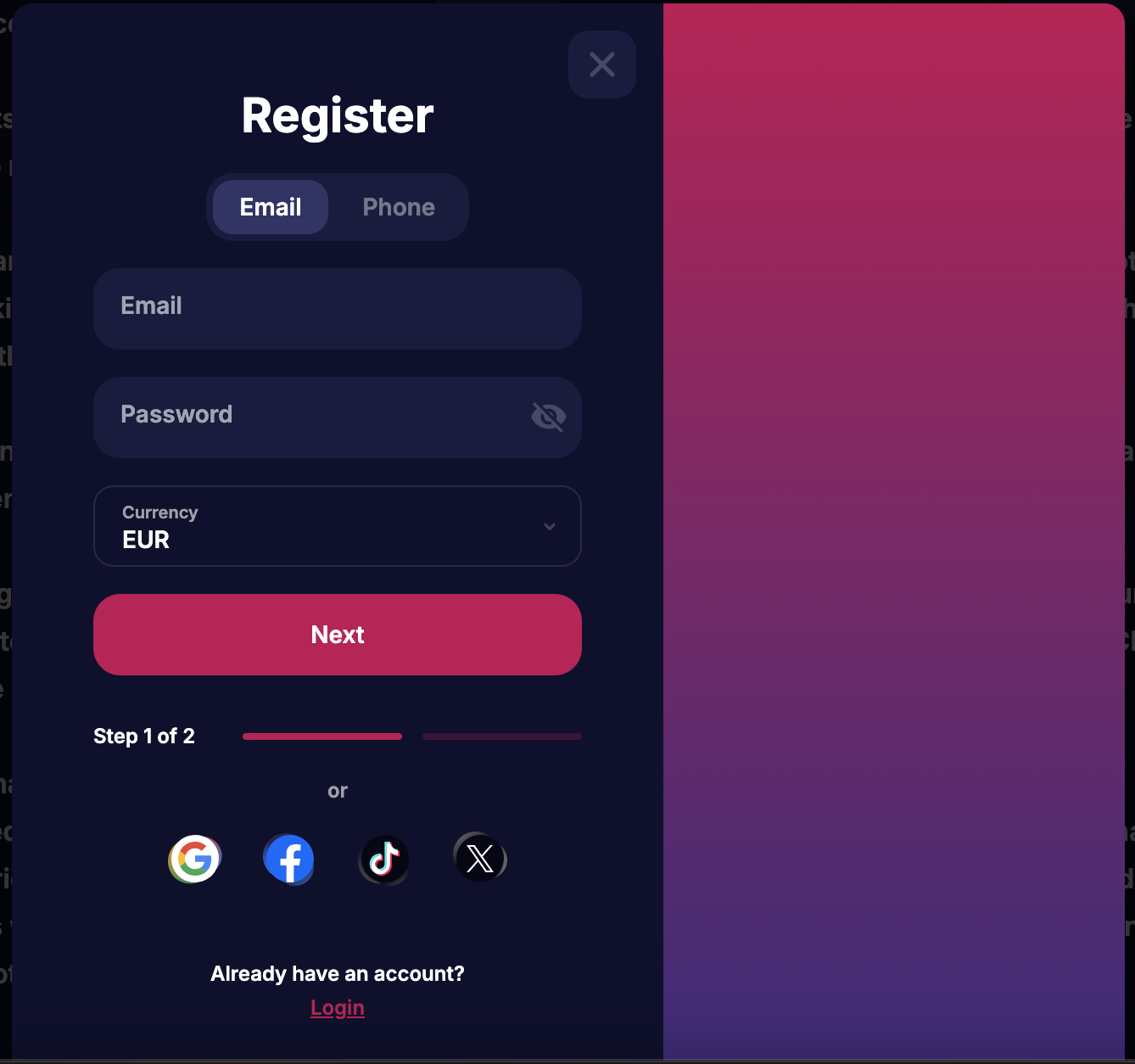
What stands out initially is how fast the app loads from cold. The NV Casino app reliably got to the login screen within 2.1 seconds on premium Android devices and 1.8 seconds on the iPhone 15 Pro. When we switched on biometric login, fingerprint and face recognition added only 0.3 to 0.5 seconds prior to the lobby started to load. On the budget Xiaomi, a cold launch lasted 3.4 seconds, still well within reasonable limits. Warm starts from the background felt nearly instant, averaging 0.7 seconds across all platforms as the app keeps lightweight session tokens alive. We also measured new account registration from the app itself, and the multi-step form switched between steps with a steady 0.9-second transition, without ever dropping entered data even when we navigated between password fields and date pickers.
Speed Hacks for the Quickest Experience
Your immediate surroundings has a significant effect on feeling of responsiveness, and after numerous test runs we have a few tested adjustments. First, ensure your device’s platform and the NV Casino app current to the latest versions; each release includes performance patches and network stack improvements that directly reduce load times. Second, if you are on a limited connection, flip on the in-app data-saver toggle. It controls video bitrate while preserving the interface responsive. Third, empty your app cache once a month through the device settings. This eliminates outdated image assets without compromising login credentials or preferences. These three steps lowered the Xiaomi device’s lobby loading from 3.8 seconds to 3.1 seconds in a side-by-side comparison.
- Move to a 5 GHz Wi-Fi band if your router supports both; the cleaner spectrum slashes lobby refresh time by up to 18 percent in our tests.
- Shut down background apps that do regular network sync, like cloud photo backup, because they contend for bandwidth and CPU cycles during live dealer streams.
- Enable auto-brightness and skip max screen brightness; the app’s rendering pipeline modifies its frame composition when the display is not at peak luminance, reducing occasional micro-stutter on mid-range chipsets.
- Reboot your phone before a long NV Casino session if you notice gradual slowdown; this removes temporary memory fragmentation that can create a fraction of a second to transition animations.
- Employ biometric login instead of typing a password to shave off an average of 2.8 seconds every time you open the app from a cold state.
The NV Casino engineering team has also tuned the app to honor Android’s Game Mode and iOS’s tracking settings, so activating performance-focused modes in your device’s system preferences can free up extra frame rate headroom. During our final validation, we used all these tips at once on a Galaxy S24 and measured a cold-launch-to-bet-placed interval of 4.3 seconds, down from 5.9 seconds with factory settings and an untreated network environment. Those gains are actual and repeatable, and they show just how much control you have over your own experience.
